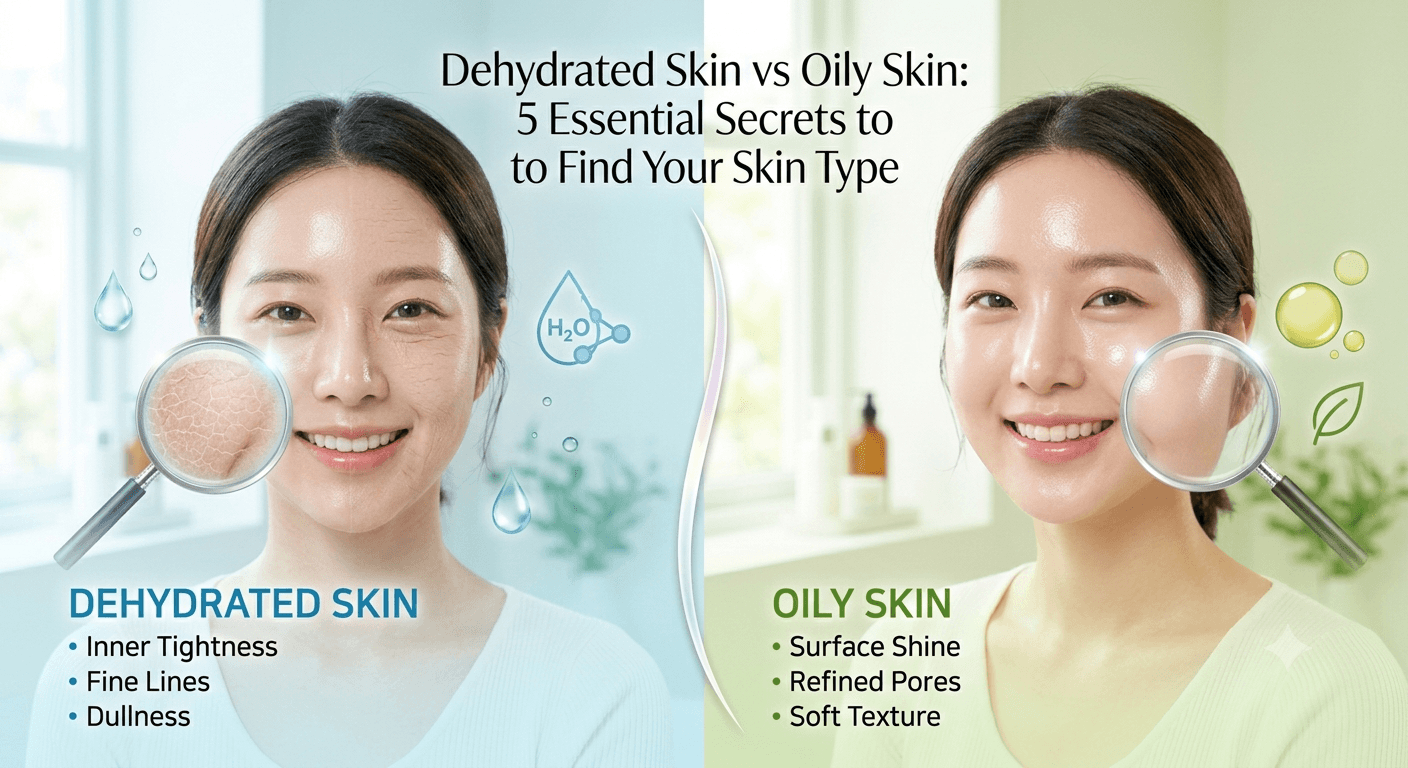
Introduction to Dehydrated Skin vs Oily Skin: Demystifying the Confusion
One of the most frequent skincare mistakes consumers make is misidentifying their true skin condition. Misjudging the difference between Dehydrated Skin vs Oily Skin often leads people to buy harsh, oil-stripping cleansers and mattifying toners that inadvertently exacerbate their underlying skin issues. In South Korea, beauty experts distinguish sharply between skin type (genetic oil production) and skin condition (water content), coining the popular term Sok-geonjo (inner skin dryness).
It is entirely possible—and remarkably common—to have surface oiliness alongside severe deep tissue dehydration. When your epidermal cells lack adequate water, your sebaceous glands overcompensate by pumping out extra oil to coat the surface, creating a confusing combination of shiny, greasy skin that feels uncomfortably tight, flaky, or reactive underneath.
Understanding the distinction between Dehydrated Skin vs Oily Skin is the ultimate key to selecting the right moisturizer textures, active ingredients, and cleansing methods. In this comprehensive dermatological guide, we will break down the biological differences between oil and water imbalance, provide a simple at-home diagnostic test, and outline a targeted K-Beauty routine to restore perfect equilibrium.
The Biological Science: Sebum Production vs. Water Content
To solve skin imbalance, we must look at the physiological mechanisms governing epidermal moisture.
Skin oil (sebum) is produced by the Sebaceous gland on Wikipedia, located within the dermal hair follicles. Sebum acts as a lipid coating that lubricates the skin and prevents micro-pathogens from invading. Genetic factors, hormones, and climate primarily dictate whether you have naturally oily, dry, or combination skin.
In contrast, hydration refers strictly to the water content held within skin cells. Water loss occurs constantly through Trans-Epidermal Water Loss (TEWL) when the protective lipid barrier is damaged by harsh weather, over-exfoliation, or hot water.
+------------------+----------------------------------+-----------------------------------+
| Feature          | True Oily Skin (Skin Type)       | Dehydrated Skin (Skin Condition)  |
+------------------+----------------------------------+-----------------------------------+
| Root Cause       | Excess sebum from oil glands     | Lack of water in epidermal cells  |
| Surface Feel     | Slick, shiny throughout the day  | Greasy on top, tight/itchy underneath |
| Pore Appearance  | Enlarged across T-zone & cheeks  | Variable; fine dehydration lines  |
| Flakiness        | Rarely flakes                    | Frequent flaking around mouth/nose|
| Make-Up Wear     | Slides off due to excess oil     | Clings to dry patches, looks cakey|
+------------------+----------------------------------+-----------------------------------+
When you treat dehydrated skin as if it were simply oily—using aggressive alcohol-based astringents—you strip away remaining barrier lipids. This causes TEWL to spike, forcing your oil glands to produce even more surface shine in a desperate effort to protect the face.
The 3-Minute Bare-Face Diagnostic Test
If you are unsure where your skin falls on the Dehydrated Skin vs Oily Skin spectrum, perform this simple Korean skincare self-assessment at home:
- Cleanse: Wash your face thoroughly with a mild, low-pH gel cleanser.
- Wait: Pat your face dry with a clean towel and do not apply any toners, serums, or moisturizers.
- Observe for 30 Minutes: Sit in a climate-controlled room for half an hour and observe how your skin feels:
- If your skin feels tight, uncomfortable, or shows fine surface lines while looking slick on top: You have Dehydrated Skin (Sok-geonjo).
- If your skin feels comfortable, soft, and gradually produces an even layer of shine without tightness: You have True Oily Skin.
- If your skin feels flaky, rough, and tight everywhere with zero shine: You have True Dry Skin.

How to Balance Dehydrated Skin: The K-Beauty Moisture Approach
If your diagnostic test revealed dehydration hidden underneath surface oil, follow these foundational routine adjustments:
1. Switch to Water-Gel Hydrators
Avoid heavy, pore-clogging occlusive ointments, but do not skip moisturizer altogether. Choose lightweight, watery gel-creams rich in Hyaluronic Acid, Birch Tree Sap, Glycerin, and Ceramides.
2. Practice Gentle Low-pH Cleansing
Replace harsh foaming scrubs with low-pH (5.5) gentle cleansers that preserve natural skin lipids while removing surface dirt.
“Fixing dehydrated skin requires replacing water, not fighting oil. Once you flood the epidermis with water-binding humectants, surface oil production naturally scales back within weeks.”
Frequently Asked Questions (FAQ)
Q1: Can I skip moisturizer if my skin feels very oily?
No! Skipping moisturizer causes your skin to lose water through evaporation, which signals your sebaceous glands to produce even more oil. Choose a lightweight, oil-free gel moisturizer to hydrate without clogging pores.
Q2: How long does it take to repair dehydrated skin?
With consistent use of gentle cleansers, hydrating toners, and ceramide-rich moisturizers, most individuals see significant improvements in skin comfort and reduced surface oiliness within 2 to 4 weeks.
Q3: Are chemical exfoliants safe for dehydrated skin?
Use them with extreme caution. If your skin barrier is compromised and dehydrated, suspend all strong AHAs, BHAs, and Retinoids for 2 weeks until your barrier repairs. Once healed, reintroduce mild exfoliants (like PHAs) once a week.
Final Verdict & Conclusion
Distinguishing between Dehydrated Skin vs Oily Skin is the single most important step toward achieving balanced, radiant skin. By recognizing that surface shine is often a cry for deeper hydration rather than an excess of oil, you can tailor your routine with gentle, water-rich K-Beauty formulas that restore true harmony to your skin barrier.
📖 Recommended K-Beauty Guides: